

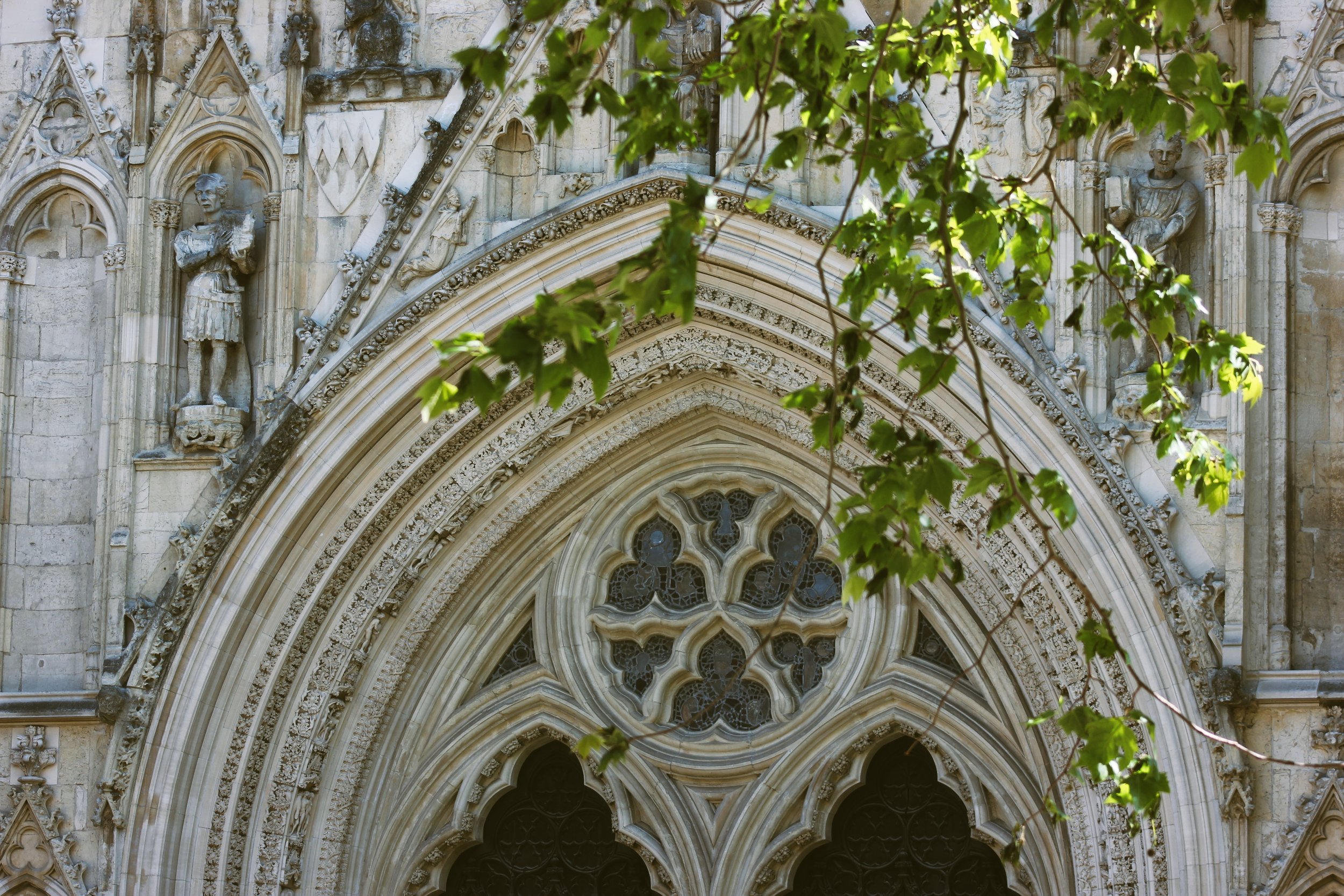
Sanctified Foliage by Ella Humphreys
Issue 38.0
Editor’s Note
Dear Washington College Community,
It is my great honor to enter a new and exciting year as Editor in Chief of Collegian. I speak from my experience as copy editor last year when I say that Collegian is truly a unique space for both art and literature. I, along with each member of my talented editorial board, are proud to contribute to a magazine so thoroughly dedicated to celebrating the creativity of our peers. However, creativity and talent are not the only essential aspects of Collegian. The power that our publication has to support and uplift the endlessly diverse voices of our campus community is nothing less than awe-inspiring. Each contribution that has been published in Collegian from its inception to today has created a tapestry that records the creative voices of students from all walks of life. Now more than ever, Collegian is dedicated to keeping our diverse tradition alive.
Of course, these virtues that I laud in our magazine would not be present without the exceptional members of my editorial board. Sarahbeth, Hope, Piper, Evan, Ella, and Eme are all talented, witty, and deeply caring members of a highly efficient team, and I consider myself to be very fortunate to work alongside their inspiring talents. I would also like to thank my predecessor, Sheri Swayne, for her incredible work during her time as Editor in Chief. She showed me how to lead with both attention and compassion for our community, as well as trailblazing new paths for the improvement and innovation of Collegian.
Now, what better way is there to start a new academic year than with the writing and artwork within our latest Staff Issue, 38.0? There is a tone among these pieces that reaches understandings beyond everyday experience, one that has even been described as sanctified. I believe that the works of our editors featured here explore and expand our ideas of connection; connection with nature, mortality, objects, and between each other. This kind of deeper connection is what I seek to provide through Collegian this year, by using art and writing as a vehicle to create new understandings and deeper bonds between one another.
I am beyond excited to experience how my peers will contribute to our community with their unique voices this year. Your talents are always welcome in Collegian.
Wishing everyone the best,
Leonardo De Luca
Editor in Chief of Collegian
Table of Contents
“Giancarlo and Sofia Argue in the Dark” by Evan Iseli
“Reaching for Dusk” by Eme Cummins
Lucky Leo by Ella Humphreys
“Passages of Old” by Ella Humphreys
“Saintly Girl I Knew” by Piper Langenfeld
“Unforgotten Tomb” by Ella Humphreys
“Life and Death Cycle” by Hope Benjamin
“A Staple for Your Time” by Leonardo De Luca
“Reaching from Dark” by Eme Cummins
“Life in Death” by Ella Humphreys
“Moving in with Oedipus” by Sarahbeth
by Evan Iseli
Giancarlo and Sofia Argue in the Dark
The engine idles and the humming relaxes Giancarlo; he thinks of what his mom used to always tell him about the tide, that it is how human breath should be, but to him the idling of this car seems closer to it. He notices the woman outside smoking by the generator and wonders if this is the moment she has looked forward to all day.
Inside the convenience store Sofia is screaming and pleading with the pharmacist. Leaning, shaking, pacing. She disappears in the window, Giancarlo turns away. Lightning in the sky like daylight. By the time the rain comes down Sofia is sitting in the driver seat, stone-faced: “Are you still awake?” He doesn’t even have to nod. She starts driving and the rear-view mirror is awash with the downpour—Giancarlo couldn’t see behind him if he tried. At speed the drops reflect off all the windows, projections spinning across Sofia’s face like spectral tears.
They dance around conversation but neither can take their eyes off the road, the streetlights and brake lights winding about their sight. Talking and driving at the same time becomes too precarious, so they stop in another parking lot to talk about their dreams. When they leave, the concrete is still a river. Giancarlo combs the glove compartment for a toothpick and with it hanging from the corner of his mouth he feels like a movie star. Sofia smiles; she doesn’t know what he’s thinking but she knows he has gotten his mind off what he’s trying to forget.
“The only way we can sell it is if you call the realtor. All it takes is you picking up the phone and I only asked you a thousand times.”
An hour later they’re in the driveway and the porch light is barely hanging on. Giancarlo and Sofia argue in the dark.
“Don’t pretend you listen either.”
“This is the whole reason people talk to each other.”
Sofia plucks cacti needles from her jeans and the sky will never mend from the lightning opening the same wound over and over. Giancarlo doubts that lightning can’t strike twice in the same place. They decide he will sleep in the car this evening.
A reprieve from the rain, no such luck with the silence. As he reclines in the open trunk he sings and feels the heat. The thunder threatens him, but like he always said when he was a kid, he’s not scared of anything. Family vacations to the beach are on his mind, as well as his mother standing in the rain, waving her arms in the air with a once-in-a-lifetime smile. For him the scene unspools with certainty, though he knows that if you asked anyone else in his family they would say it didn’t rain that day.
Giancarlo wakes up in a cool darkness that hides the morning. The kitchen light is on and it reflects off the eyes of the fox watching him from the street. Sofia bangs on the window and it skitters away, but she also means come in for breakfast. He rolls out of the trunk but he rolls too far and the pavement is there to meet him. A small stream of blood channels out into the grooves of the concrete, joining the slow motion of the rainwater.
Sofia stands over him in the driveway, not to bring him breakfast but to stare at him as if this is the problem, the only problem, and then she goes back inside. He drives to work. He passes the faded, graffitied walls and a group of tourists, which is unbelievable because there is nothing to tour; hope you enjoy the junkyards and strip malls, he thinks.
Sofia phones him twice at work, and just as he thinks it’s about to be twice it’s three times, she’s calling because she needs him to pick her up, she has to go somewhere, she has to. It will be just like last night, he knows it, and he won’t be able to handle it. “No,” he says, and just for saying that, she’s not waiting for him at home, the lights are on but the house is empty. A walk down the street under the swinging century plants lining the yards, only to see that all the neighbors’ houses are dark too, and the bus stop is as quiet as it always is. Back in his driveway with his head in his hands.
An hour later now and the couch is warm against Giancarlo’s back, he stares at a worn journal so he doesn’t have to stare at the empty orange container on the table, or the second one, or the third. If you hold one up to your eye the translucent plastic warps the world until nothing makes sense, and nothing makes sense now. His eyes follow the curl of his mother’s handwriting in the journal, swells of ink carrying a procession of beautiful words, and so he fills his head with beautiful words because he could not find any before.
Sleep nudges him from time to time so it is time to go, now he is driving a little further than he meant to, a sign welcomes him to the next state and he slips through in quiet. He calls Sofia one more time but she doesn’t pick up. Wind coming from across these plains he can just feel it, it’ll be like a herd of something—even now there are surges of strong breath jostling his car. As the window rolls down a drop of rain finds his chin.
Resting, eyes fluttering open and closed, rain again—with the seat reclined, he lays on his back and watches it pour onto the sunroof directly above him like he is drowning. The spare blanket is rough against his soft hands. It’s barely holding together it’s so old. He scrapes it across his face, trying to find and wipe away the uninvited tear on his cheek. Sofia will not wake him up the next morning.
The sunrise comes blazing as he drives his car out of the ditch where he parked and up onto the shoulder. Tractor trailers rush by under clouds expanding into oblong shapes, and tomorrow settles over Giancarlo like a sickness. A hundred feet away a man fishes in a red pond.
“I don’t have nothing for you to eat. Hell, even if I had food I wouldn’t have nothing for you to eat.”
“That’s okay.”
“Haven’t caught anything in a while, I’m pretty hungry. Nothing could live in a pond this small anyway, especially a pond this dirty.”
Giancarlo doesn’t say anything, just settles into the silence and wonders how close in similarity two people’s thoughts are as conversation fades into observance. In such an open desert the question seems just as large, and he starts to understand how his gravitation towards places like this matches his yet-unfulfilled curiosity. And he can’t help but look back and try to locate the moment he started avoiding it.
“Why fish if the pond is empty?”
The fisherman’s protracted explanation is hard to follow, but Giancarlo finds it calming. It seems as though the fisherman’s mind wanders a good deal, flutters back and forth between thoughts, a flag blowing in the wind. Giancarlo recognizes it and misses when his mind used to drift around that same way.
“It’s trying, sleeping in my car,” he muses.
The fisherman dips his foot in the water and his sandal floats away. “It’s even more trying not having a home.”
The air ripples in the distance.
Giancarlo: “Tell me one more time.”
“It reminds me that there does not have to be something to work toward.”
Giancarlo nods, the cuts on his neck and chin flaring. He picks the tiniest fragments of gravel out and lets them fall into the water. “My mom and I started taking walks down to the pond by our house. Never went fishing, though.”
“Well, just sitting is nice, too.”
Giancarlo looks at the fisherman but he can tell that the man is lost in his own memory, something he is not ready to relive with a stranger in the desert. The fisherman finally nods back without looking, knowing that Giancarlo will never understand. The conversation doesn’t last much longer than that because Giancarlo needs to find Sofia.
The glare on the highway is all but blinding. The suspension buckles, just take a look in the mirror, Giancarlo—roadkill. Sofia would say something funny. He drives further, back into the state, alongside a ranch now. Alongside an elk, it comes out of nowhere but it is on the other side of the wire fence, galloping like a horse in the same direction he is traveling. “I’ll never be as carefree as you, friend.”
Sofia is waiting at the house and no she won’t talk to him, she only wants to talk to her mom but her mom passed away today and Giancarlo wouldn’t even take Sofia to visit her before she died. “I called yesterday, I tried to ask you, three times I called and tried to ask you,” she says. Giancarlo wants to explain but he knows the words will never leave his mouth as beautiful as they could flow from his own mother’s pen, but maybe it’s because Sofia is holding his mother’s journal, and with it, holding all the beautiful words on layaway.
“You’re damn lucky to have this,” Sofia says.
Silence in a humid house. Giancarlo takes his shoes off though he can’t say how long he will be staying. Sofia disappears and so does the journal; she will put it somewhere where he will find it, not immediately, but not after too long. Maybe he will never bother to look for it.
It’s later, neither knows what time it is, but someone has turned on the TV and thank God because radio silence might poison them both. The wake of the storm keeps the trees crying. Every conversation like an old car, starting and sputtering and dying out because there’s nothing left in the tank. Sofia gets up to leave and Giancarlo supposes he should go with. There is no argument.
Stolen glances on the walk because that’s all there is left to steal. Trust and faith were fenced a while ago, maybe at the same time, never recovered, and both of them know that as they walk with their hands close together but certainly not touching. The sidewalk is interesting, thinks all of their neighbors that pass them, their heads cast to the ground. Sofia quickens and moves steps ahead of Giancarlo. She kicks a beer can and sends it into the street, a car’s tire catches it as it flies. Good timing. The sidewalk fades into grass, not a tangible edge just slow change.
Tinny rattling as Sofia tries to climb the chain-link fence, not to get to the top, that’s not her aim. Giancarlo sits on a manhole cover, dropping coins through the holes to hear the splash as they tumble into shallow water. She looks at him, no hard feelings, just exhaustion with anything other than candor.
“I met someone at work,” she says, it’s not surprising, Giancarlo barely moves. There’s no forward to backward, just up to down, up the fence, down the manhole. Up with the wind or down with the rain. Fixed in this one spot, sink or swim as you’re submerged in the most hollow kind of security. The most painful.
“I also don’t know what I’m supposed to do about this,” she continues. Now she sits on a blown-out tire, sinking into its center. A grill a block away sends smoky incense past, smoky incense and resonant laughter. A man hollering across the street; the garbage can he’s talking to doesn’t holler back.
“We’ll wait and figure it out, wait and see I guess,” Giancarlo finally says, dirt gathering under his fingernails as he digs into the ground. Sand in the air, now caught in his throat. Every conversation like this one the same, always ending the same. The last time—“Give this all a year” was how it ended, five years ago he said that, five years later and what had gotten better? The rocking chair scraping on the stone porch then, leaving cloudy arcs the same way planes leave contrails. She was fixing the railing and he wasn’t being much help with anything, sitting around and trying to read, alternating between the owner’s manual to his car and a cheap paperback from the dollar store. Stale gasoline on the air, joined by sound, Sofia’s father working on some venison in the kitchen. She threw a screwdriver across the yard, which scared the dog. “Your idiot brother lost the job. Where does that leave us?” was how it had started. Long day ahead.
His whole hand is covered in red dirt now, practically buried, and he looks at Sofia, who is still sitting in the tire, this odd moment. The years play out a few different ways, she’s matching his stare and he knows she’s playing it out too, all the different possibilities. A pale green taxi rolls by and he tosses a pebble after it. That car could take him somewhere else but he’s too worn out to hail it properly. Something stings his forehead; he looks over at Sofia and her face has hardened. She throws a second pebble at him and he knows she must think that he had been throwing rocks at her and not the taxi. He picks up the smallest pebble he can find and flicks it at her. They go back and forth but she’s got the better aim. Dust kicks up as they dig around in the dirt. After a couple halfhearted volleys Sofia gets bored and stands up.
“So—,” Giancarlo stammers. A bird lurches up from a mailbox and soars after her as she walks down the street but Giancarlo won’t follow, can’t follow the same way. Above, the traffic light shakes in the heavy wind and turns red, Sofia trips in a pothole as she crosses, then doesn’t miss a step. She sits across the street from Giancarlo on a bench that used to be painted blue—she stares down, reads her tattoo. Last year when she got it he copied the same decisive lines on his forearm in permanent marker. She didn’t think that was funny. Maybe because he misspelled a couple of the words.
The sun is hot in the afternoon so Giancarlo picks himself up from the ground, one last look at Sofia but he’ll be back in a few minutes. A newspaper blows against his feet as he walks, entangling in his legs, loath to continue down the sidewalk. The owner of the gas station eyes Giancarlo as he crosses the parking lot, maintaining his glare as he continues to pour ice into the big box out front. There’s a large cartoon polar bear decal on the glass door, peeling, but at least it's smiling.
Inside, wandering through the tight aisles, sense and direction washed away by the fluorescents overhead. A buzzing in his ears but it might be coming from the lights. The drink station is dirty, straws and lids and napkins strewn across the counter, a disaster of conscientiousness. Giancarlo fumbles with a cup and shoves it under the spout, hitting the knob and letting loose a steady pour of water. With his other hand he reaches for another cup then thinks better of it. No, get one for her. A short argument with her in his head, then something cool on his arm, the overfilled cup cascading down onto him. He sighs and breathes deeply and the radio plays something old and familiar but not quite familiar enough. Shuffling and laughter, he sneaks a glance past the drink machine and there it is, an old couple awkwardly dancing to the song, the aisle their wedding aisle, and they’re giggling and swaying and not completely committing to it because to them it feels like they’re getting away with something. Getting away with being young again.
Giancarlo rubs his head but it’s not helping the headache, he had to set one of the drinks down to do it, and now the condensation is running down the side and soaking the prayer cards on the shelf. He picks up the cup and says one of the only prayers he can recall, hoping he remembered the words right, then turns to walk to the register. He glances one last time at the biblical faces lining the aisle, who stare past him like he were nothing at all.
On the counter there’s barely enough room for the drinks between the boxes of cigarettes and keychains and items no one bothered to put back. The owner of the gas station dips his finger into one of the cups, then seeing that it’s just water sighs and waves Giancarlo away. The old couple, still talking and laughing, hold the door for Giancarlo on the way out, and he waits for them to disappear around the corner before he opens the big ice box, unties a bag, and drops a few cubes into his drinks.
The sound of construction a few blocks away dulls and quiets his thoughts as he walks, the thumping and humming slowly migrating across town. Sidewalk, curbs, familiar under the feet—the same route he would walk with his mother. To school, church, the pond, and eventually, walking alone, to the hospital where she was waiting for him. Waiting as long as she could.
Giancarlo smiles as he sees a silhouette on the bench, the smile is gone when it’s not Sofia, just a sad man with a briefcase and troubles. The sign above him, Giancarlo had not seen it before: blue faded to the same color as the bench, and an illustration of a bus. He drops his head and sets one of the cups of water down on the sidewalk. Briefcase man across the street looks up at Giancarlo but they both know they can’t help each other; everyone’s got their own problems and no one has the antidote for anyone else’s life. More cars drive by and eventually Giancarlo walks over and sits in the blown-out tire, sits and waits for the next bus.

Reaching for Dusk by Eme Cummins
by Ella Humphreys
Lucky Leo
Perhaps it was a good luck charm,
A small, carefully embroidered omamori,
with a gentle hue reminding me of the clementines I would peel and eat as a child,
I found it along a small neighborhood street, a few paces from my middle school,
I wondered how someone could discard something so sacred,
Something bright that brings immense joy.
It became my good omen, even if it carried judgement,
Having been taken advantage of, left on blazing concrete,
With time, we became acquainted with each other's company,
This omen, with its embroidery, resembled that of a tiger’s stripes,
Inlaid with gold leaf and small smudges of dirt from its previous terrain,
Mom thought it must've been cursed. I think it gave it character,
I called it Leo.
Leo was special to me,
No matter who else cast it aside, I kept it pinned to my favorite tote,
Never moving, even with the wear and tear of time, from my first to last year
It had an aura of comfort, given to me who cherished it,
It is reminiscent of a piece of sunlight, discarded as the sun's gift,
To a sweet girl often compared to the moon,
Her gaze soft, her energy full of weariness.
Brushed away with the luck Leo always gave
And gave
And gave
Gave as much as it could to its kindred spirit
Thick and thin
Even as time passes and the tote is hung up, and our caps have been thrown
Distance never made a difference
The luck of Leo still carried on.
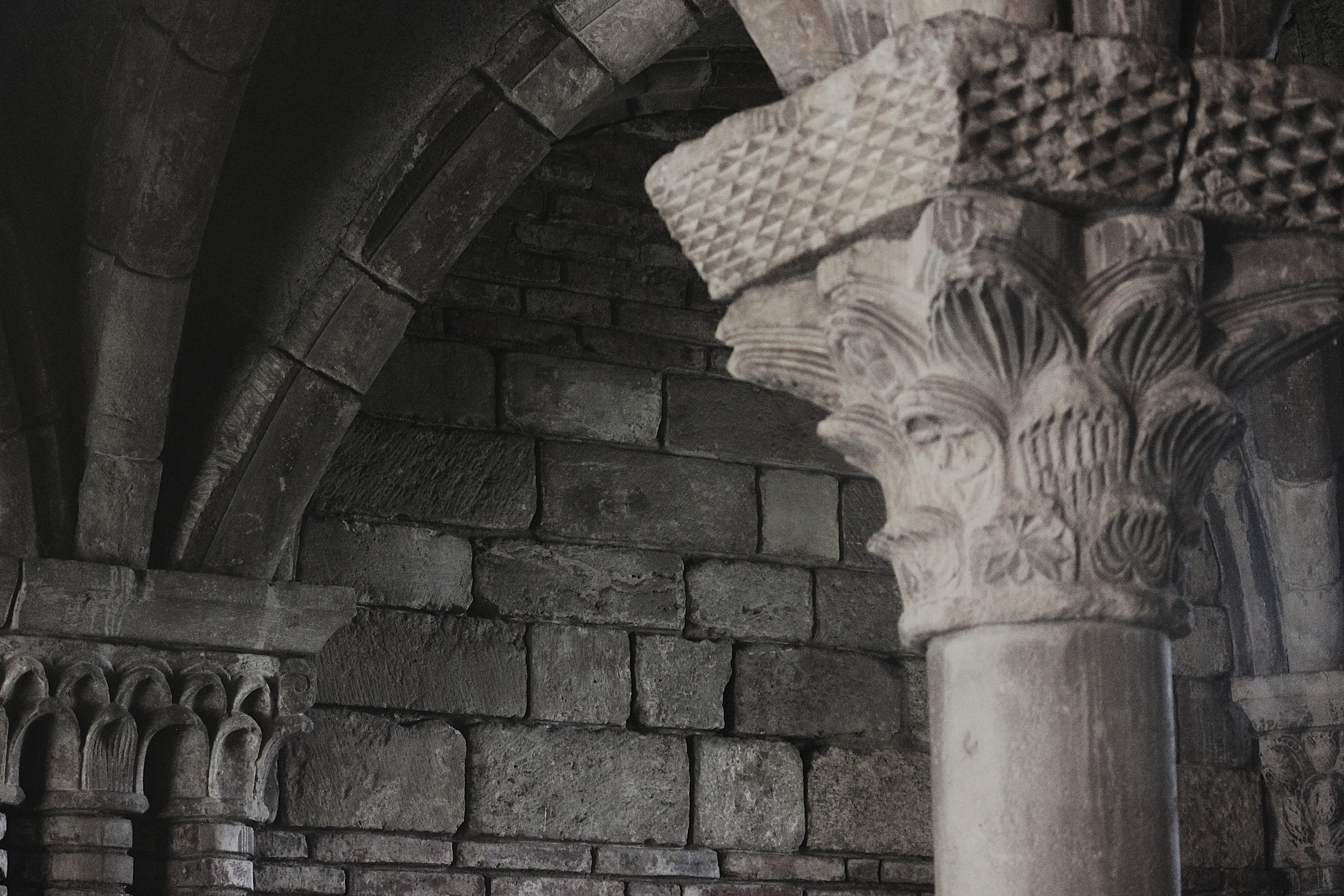
Passages of Old by Ella Humphreys
by Piper Langenfeld
Saintly Girl I Knew
My first crush was a saintly girl; in her, held my faith, like some modern reliquary, fit to take form of our desires.
We met at a humble church—in size, in looks, in people—around the ages of eight and nine. Her with her mother, me with my grandma. The parking lot was larger than the property, and the three small buildings formed a U, an arch delineating the first stretch of my queerness, carved into it a cycle of pious women I would love, including a girlfriend who could not decide between me and her mother’s desire for her to be pure.
It was easy to admire God, to pretend to know him, with her at my elbow. Frizzy blonde curls and pastel dresses like rosaries I held to my chest during service, clutching to them in boredom and grief when prayers weren’t answered.
When we were younger, when church was little more than goldfish and coloring, we would run around together in the courtyard outside, playing tag and racing to the hallowed out tree where fairy lights hung. We raced from building to building, skidding up shined granite steps and skinning our knees on the pavement of the parking lot.
She expelled my misgivings about church, created a way for me to enjoy it, carved a path in me so that there was space for God and space for her.
She would drag me by hand to her mother’s classroom, where we helped with crafts and clean up and I did not have to sit through the sermons, only laugh with her in that dark, cool room, small basement windows only letting in a small sliver of the sun. She would try to hurry our tasks along, and I would dawdle, hoping for a few extra minutes to pass before her insistence to leave began.
When we would eventually be ushered into service, for the last 15 or 30 minutes, I would sit beside my grandmother, in a pew closer to the back, and she would sit at the front, mind riveted to the pastor, hands clasped dutifully in her lap. When I grew bored of listening, grew bored of tracing the puffy veins of my grandmother’s hand, I would stare at her sweet curls from behind, wondering if she’d be up for tag, or hide and seek, or if she would purse her lips in her dainty grimace she gave me when I was acting too childish, although only a year younger than her.
When the time for Bible Studies had arrived, when we graduated to some unknown, higher plane of faith, me a year early to stay by her side, the games ceased, and I was left grasping for encouraging smiles, left leaning towards her lilting voice as she read gospel and attempted to lift me to God.
The two of us were side-by-side, and she was the only familiar thing to me. I had never understood the stories during service, never understood why a god would flood the world, but I understood my admiration for her—if not my love, if nothing else.
I’d trail after her at coffee hour, twitchy and fidgeting in her peripheral, the space I once held in her mind shrinking rapidly with every Sunday.
I found excuses to avoid church, to evade the new, young pastor and the winces from people recognizing my shift into an awkward puberty.
I didn’t miss her when I left the church. She was no longer bows and lace but longer dresses, sedate colors, a lift in her chin I couldn’t place. No longer did she hold my faith in the cradle of her hands; a faded reliquary, with chipped jewels and faded paint.
There was nothing to miss. Far godlier than I, she was, and holier than ever.
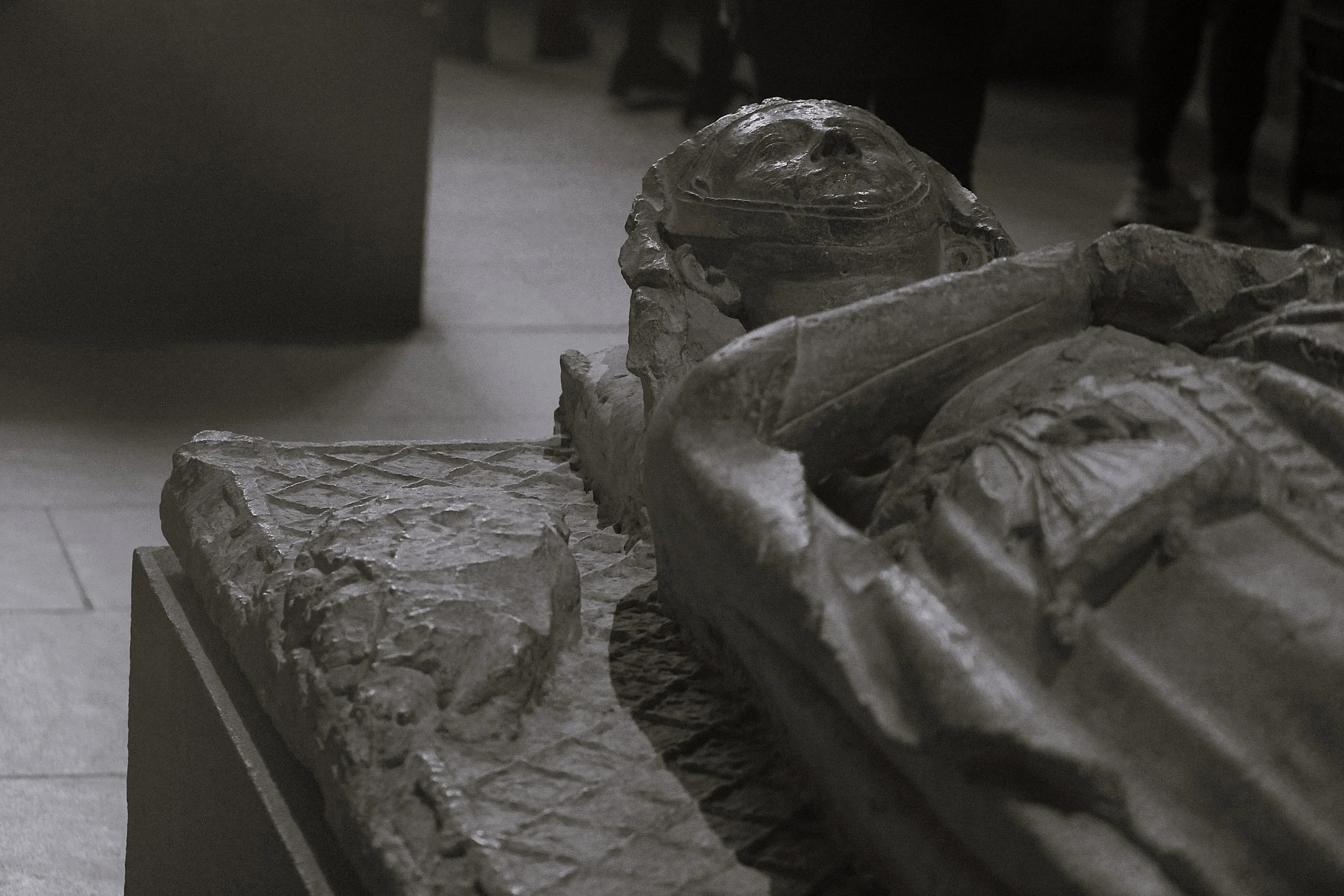
Unforgotten Tomb by Ella Humphreys
by Hope Benjamin
Life and Death Cycle
After a couple of hours my body finally has energy
To get up like the effortless wind meshing
mind and soul for the day ahead
Creation came before body, before energy
That radiates from the sun
Down into the soil
For a beautiful beetle to benefit from
The process of decomposing comes after one's creation,
After one is born onto this earth
You eventually will die
And then decompose into the ground below
As you sink further into the soil
The beetles and worms help the process move forward
Eventually you will become one with the soil
Once again, it continues
It is a beautiful thing to wake up everyday
But all of us know, that one day
We will decompose with our favorite clothes and,
The roadkill will also join us in time.
by Leonardo De Luca
A Staple for Your Time
Each staple a testament
To missing words.
Hanging unanswered
Until their whispers
Fade into wind.
Lost dogs, lost cats
Lost sentences aging
Like rusted piercings
On the utility pole.
The electrical cables hang¬—
Those drooping observers—
Above the impermanence
Of a city’s collective prayer.
The staples, like bones,
Haunt the clustered wood.
Haunting like memories
Of fading faces
I can no longer recall.
Names are torn away
Similarly to posters.
Either forcefully pulled
Or dissolved by the rain.
The pole and the mind
Are never in want of more.
More posters, more staples,
More memories
Which come and go.
Leave me a staple,
For the next time
Your posters are ripped
From my memory.
Reaching from Dark by Eme Cummins
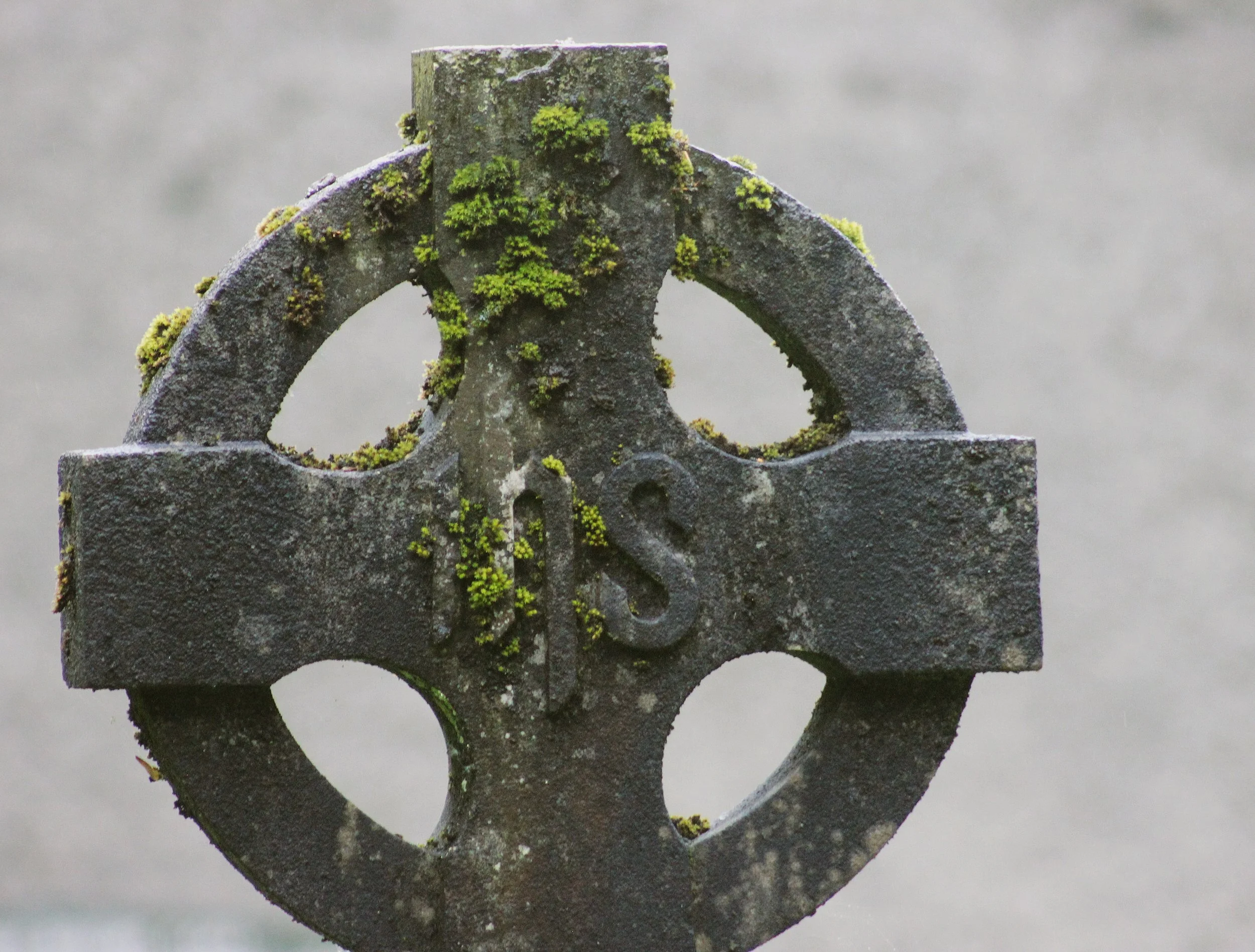
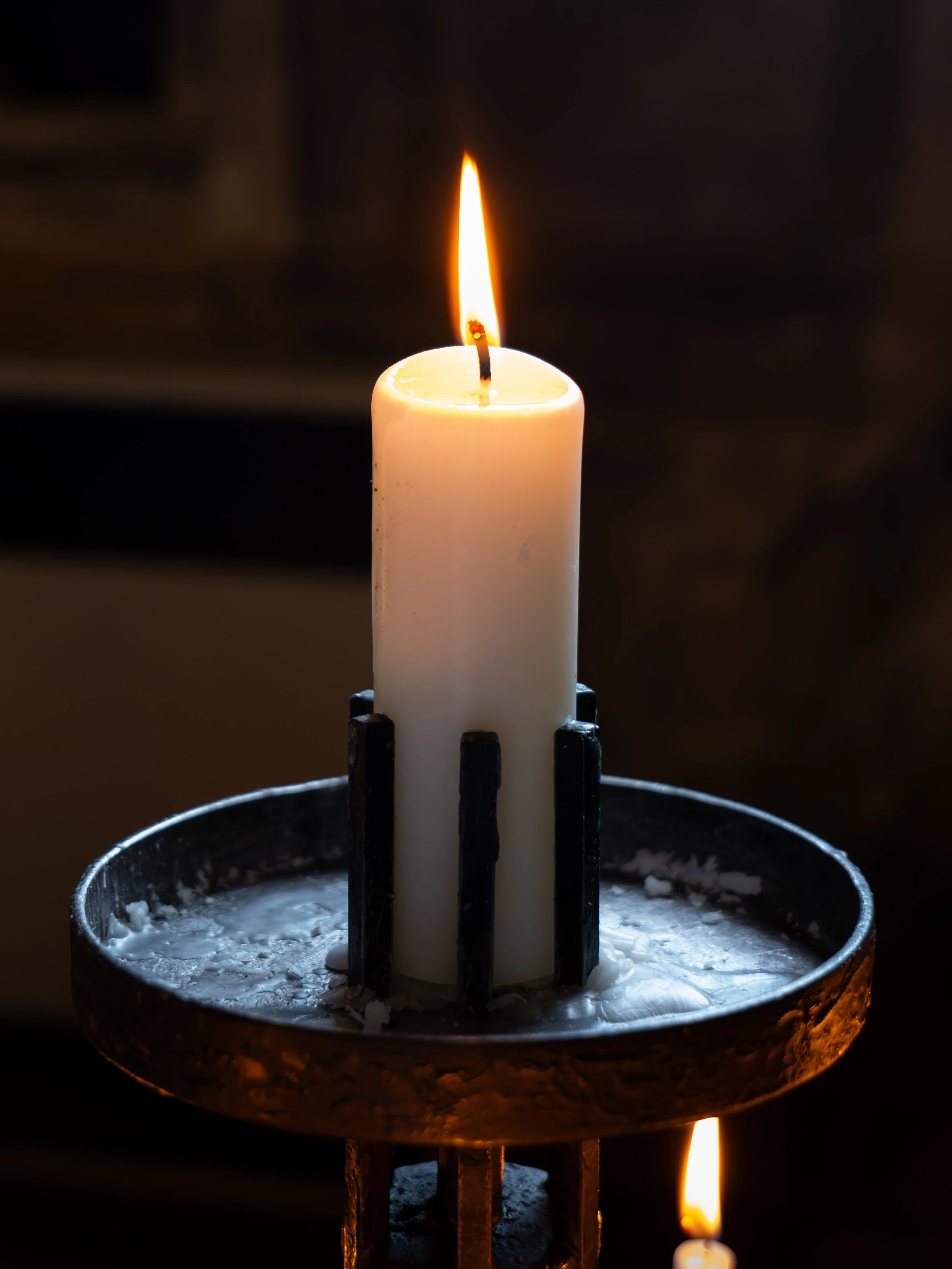
Life in Death by Ella Humphreys
by Sarahbeth
Moving in With Oedipus
Hunched over in the sloped attic, searching through piles of clothes, I come face to face with the girl I used to be. She’s buried near the bottom, beneath sweaters that still smell faintly of a house I no longer live in. At the top are the clothes chosen and praised by the man whose bed I share. I find dresses he liked better than the ones I bought for myself, shirts he called flattering, colors he said made me look softer. He often chose clothing that made me look like his mother, his best friend, or a coworker he was particularly close with. The arrangement feels accidental, but it’s not. His preferences have risen to the surface while mine have been pressed underneath.
In the myth, Oedipus is bound by the ankles and abandoned as an infant. His parents pierce his feet, tethering him in an attempt to prevent a prophecy; he will kill his father and marry his mother. But prophecy is patient. The damaged child survives, grows into a man, and walks directly toward the fate his parents feared.
My Oedipus had never been abandoned. Still, he lived as if some invisible cord remained fastened around his ankles. He was so accustomed to pierced feet that my desire to move freely seemed foolish to him. Ambition, in our “home,” was treated like a character flaw. When I imagined a different job, a different city, a larger life, he responded with the suspicion of someone hearing a prophecy he did not want fulfilled. When he saw my bare feet, he attempted to decorate them with complimented chains, with heavy implications to drag me by them on every loop.
His mother spoke to us often. She knew when he had eaten, whether he was tired, whether he needed clothes, or whether his workday was stressful. She knew the practical details of him so completely that there seemed little left for him to know about himself. His father had built a life sturdy enough for the son to rest easily inside it. His mother resented his father and wanted nothing but her son to turn out different. She wanted him to be sheltered, a good man who wouldn’t hurt her, nor others. His family’s success was not an example to him but nourishment that was warm and inexhaustible. He did not need to cultivate or hunt. He only needed to open his mouth.
He was accustomed to feeding at the breast of his parents' success, so the idea of creating his own seemed unnecessary, even unforeseen. He mistook dependence for destiny. Their connections would become his, while their money would soften his mistakes. Their confidence in him would stand in place of his effort. He spoke of the future as if it were an inheritance already waiting in his name.
In the myth, Oedipus spends much of his story searching for the source of a plague. He demands the truth, certain he will be able to understand it. Each answer points closer to himself. Maybe that’s what makes the myth live on. The horror is not simply that Oedipus has married his mother, but that he has built an identity around not knowing it. I still fail to understand his comfort in his own ignorance. There was a faint smell of acknowledgement accompanied by the thick aroma of denial.
My Oedipus did not marry his mother. He did not kill his father. The resemblance was quieter and therefore easier to excuse. He carried his childhood home into every room we shared. His parents' opinions arrived at dinner with us. Their expectations slept between us. When we made decisions, I sometimes felt I was speaking not to one man but to an entire family gathered inside his body.
I became the woman expected to maintain what his mother had begun. I remembered appointments, bought household necessities, and noticed when the refrigerator was empty. I listened to his frustrations and translated them into plans. I encouraged, reassured, and reminded. Without realizing it, I had entered an audition for a role that was already occupied.
There was no way to win. If I cared for him, I reproduced the dependence that exhausted me. If I refused, I was cold. If I pushed him toward independence, I was demanding. His mother's love had made adulthood appear optional, while my love was expected to make it comfortable. He’d reproduce his own incompetence, suggesting I step in for any mundane task through inability to do anything alone.
The attic ceiling sloped so bluntly that I had to bend while sorting the clothes. The architecture demanded my submission. Under the roof, I folded myself smaller, careful not to bump my head. Maybe that’s why the attic became the place I find my former self. She had been stored where standing upright was impossible.
At the bottom of the pile, I found a shirt I used to wear before him. It wasn’t particularly striking, nor did it have any noticeable embellishments or threading, but I remembered choosing it on my own. I remembered wanting it without first imagining how I would look through someone else's eyes. Holding it, I felt the faint embarrassment of recognizing how gradually I had disappeared. There was no single command to change. Only preferences. Suggestions. Compliments were offered when I dressed correctly and silence when I did not. I noticed which shoes had him holding my hips, and which had anger within its’ transactional undertone.
Oedipus blinds himself when he finally sees the truth. Sight becomes unbearable at the exact moment it becomes complete. I used to think this was only punishment, but now I wonder whether this blindness was also an admission. I recognized the pattern governing my life, and found that I cannot return to innocence.
My Oedipus’ tragedy was not that he married his mother. It wasn’t that he had become the spitting image of his arrogant father. It was that he had never learned where their lives ended, and where his began. His devotion looked harmless from a distance. A son who called home. A family that remained bonded. That closeness I was welcomed into quickly became an enclosure.
Love can tie ankles as surely as rope.
My tragedy was believing I could untie him. I thought that if I modeled movement, he might follow. Instead, he watched my ambition as if it were betrayal. Every step I took reminded him that his own feet were still bound, and he preferred to question the journey rather than examine the knot.
So, I begin with the clothes.
I move out; I separate what I chose from what was chosen for me. I make one pile to keep and another to give away. It’s a laughably small act.
I can’t rewrite his morals or convince him to leave the emotional fortress his parents built. All at once, I stopped being his mother, caretaker, and audience.
I had once stood beneath a ceiling designed to make me small. Now, walking out of that same room, I stare at an endless sky with my chin and hands raised as high as they can reach. I moved out of Oedipus’ home and came back into myself. I’m no longer small.