

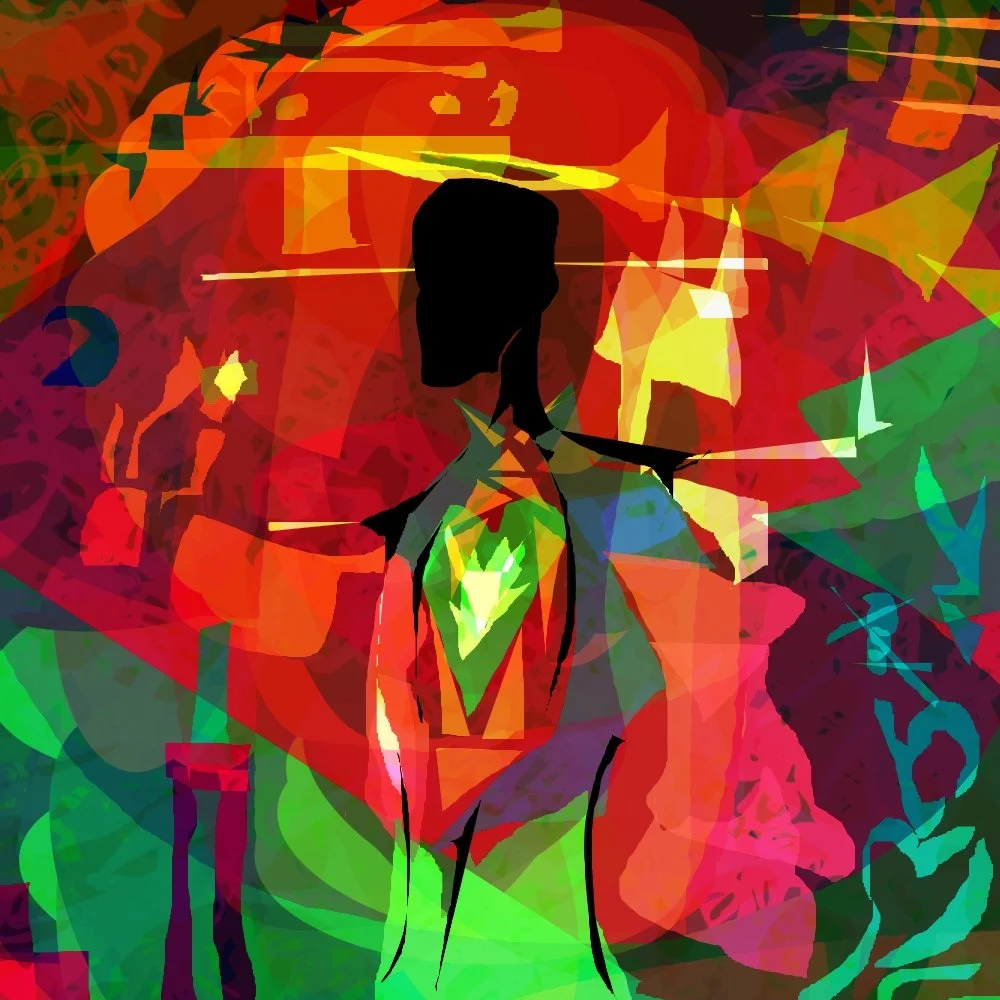
Many Things are in the Heart by Jeremy Cress
Issue 37.3
Editor’s Note
Dear Washington College Community—
After all of the exams, quizzes, papers, deadlines, group projects, and advisor-meetings to ensure a timely graduation and to avoid impending doom last semester, I’m sure you’ll realize that these colder weeks and months aren’t all that bad. Maybe you’ll suddenly be walking in a store and be dazzled by all of its Christmas and New Year’s marketing and decor and suddenly snap out of your academic stupor and realize you’re standing right in the middle of the season of joy and generosity. I think it’s safe for me to say that the root of each of these fundamental elements is people. People are magic. People have the capacity to remind you that you are fun to spend time with and you can laugh so hard your breath leaves you and you are funny and intelligent and social and considerate and tragically unserious and beautifully complicated. People remind us we’re real. So people, open up issue two of Collegian 37 and experience the real.
As always, and despite the holiday charm, the real is hard. People are hard. However, writers and artists have the ability to observe, devour, and transform (not explicitly in that order) the hardship into something tangible and relatable. Writers and artists are exceptionally talented at wrestling with people on the page or canvas or through a camera or paper. Is this avoidance? Confrontation? Who knows? What is art if its interpretation isn’t a little challenging? I invite you, then, reader, to interpret how this issue’s contributors wrestle with the habits and hardships of people, whether real or imagined, created or observed. I guarantee one of the poems or artworks or stories is going to remind you of the people in your life that you either think about all the time and miss dearly or those you want to reconnect with. Just as this issue’s contributors have written and captured their experiences and imaginings of people and truly wrestled with them, after reading, I hope you find a similar courage and wrestle with those in your life that have wrestled with you. Maybe wrap a gift and drink some hot chocolate while you’re at it, though.
With love,
Sheri Swayne
Editor in Chief of Collegian
Table of Contents
“Sunset” by Solomon Bradley
Hope Remains in Heaven by Jeremy Cress
“Inside-Out” by Melinda Kern
“Stopping Over, Headed West” by L.S. Luckey
Rebel by Ella Baldwin
“I Promise” by Evelyn Lee Lucado
No soy el único by Thomas Dario Kesey
“Dancer’s Lament” by Piper Langenfeld
“Pip Arrives” by L.S. Luckey
Pampa by Thomas Dario Kesey
“There’s Still Time” by Evelyn Lee Lucado
Six Years by Gretchen Cassell
“A Short History of Tomatoes” by Jessica Kelso
“Portrait of Father and Daughter Side by Side” by Evelyn Lee Lucado
Te Extraño by Thomas Dario Kesey
by Solomon Bradley
Sunset
Empty empires of gold
Have melted above
And are cascading over marble
Seeping through gauzy air
Drip,
Drip,
Dripping,
From violet-edged cotton balls
Pooling on asphalt,
A gentle tide
Lapping at grimy curbs.
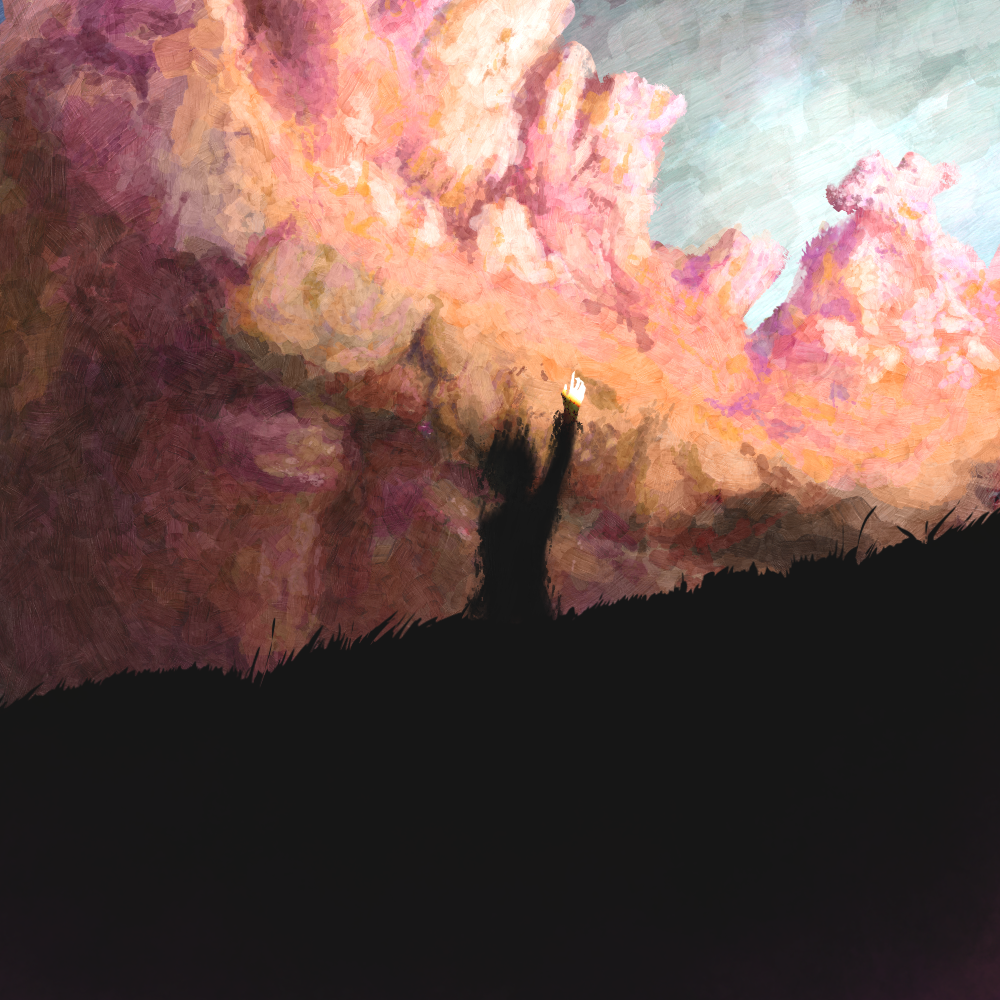
Hope Remains with Heaven by Jeremy Cress
by Melinda Kern
Inside-Out
I.
My siblings and I all squatted down over a grassless bit of yard made mud by the recent rain and felt through the viscous muck for the pink worms that lay right beneath the surface. I liked the way slimy worms’ segments slid across my dirty hands and arms as they inched forward. I showed off the seven squirming, unseeing creatures cradled in my hands to my siblings. My sister continued gathering her own. Then, my brother lifted one of the worms from my hands and curiously broke it in half.
After a brief moment, everyone wide-eyed, my brother chased me around the sloshy backyard that spring day. One half held in each hand, brown-red insides were outside and pointed in my direction. I couldn’t handle it, so much that I cried out to my sister to save me from the threat, the prospect of touching the disgustful muddled bile and blood. Eventually, I ran down the steep hill through the gate into the woods to escape, muddying my sneakers and legs in the process.
II.
When I see a man approaching, I assume that we would pass each other wordlessly. But then, he interrupts my walk with a hello from afar.
First contact for any first meeting is a handshake. My hands are open wounds. Small blisters, forming a rippling texture, cover the upper palms and crusty, bloody cracks are found at the bend of each finger. Any proper dressing would render a digit ridged, straight, and useless. Pressure stemming from red-hot inflammation blow up both hands like blotchy balloons. Itchy, dry patches persist on the wrists and the backs of hands. My fingerprints are completely gone from persistent peeling, ruining the natural grooves that form arches, loops, and whorls. The skin sheds, flakes, bleeds, weeps, and screams at me to soothe the pain. I pull gloves out of my pocket and slip them on.
I shake the hand in front of me, muttering a soft nice to meet you to the new man in the neighborhood. I only wear gloves for others’ comfort; subdued, my skin continues to buzz, letting its presence be known. The most I can do is flinch in discomfort as we talk and try not to claw out my insides while this nice man tells me about how he grew up here years and years ago and is so happy to be back after retiring.
I can feel his eyes drift to my cloth-covered hands as I gesticulate while responding to his questions about how old I am and what I am doing for work. I begin to hold my hands together as still as I can to ward off any attention. Pleasantries drag on as the two of us stand on the unshaded sidewalk. My hands start sweating—salt stinging—while the man rattles on his well-prepared script for the conversation. I try my best to fit my role as friendly neighbor.
Excessively fidgeting fingers bleed through the cotton. The man’s expression changes, his gentle grin drops. He looks around, seeking help, like the sparse line of trees or asphalt could supply an exit. Smiling forcefully, he makes some remark about needing to get home for dinner, but I’m not listening anymore. After locking my hands together behind my back, the most I provide back is a half-nod and a blank stare.
He leaves. I look at the dry fissures making up a nearby road verge. Then I take off my gloves and wipe the sweat off my face with them. Putting the gloves into the back pocket of my shorts, I continue to meander on.
by L.S. Luckey
Stopping Over, Headed West
I become obsessed with the
marks we leave, with
any sign you were here in my
copper brown brief stains and the little
kicking cramps of my uterus, overeager, responding
to silicon, like you shifted
me, mixed
me up, ran wiring
through
—in my purple kisses turning
brown under clean mountain sun in the
Wheeling swimming pool, hundreds of miles from
your orange student bedroom, where the world
came back into place last night.
I wanted to leave while your cheeks were
red splotches and your breath was even at midday, so I
could keep it wordless, warm brown all over
me—last month’s
blood, greasy hair, your
teeth, this
arm of yours, sun-bronzed, in
and out of me.
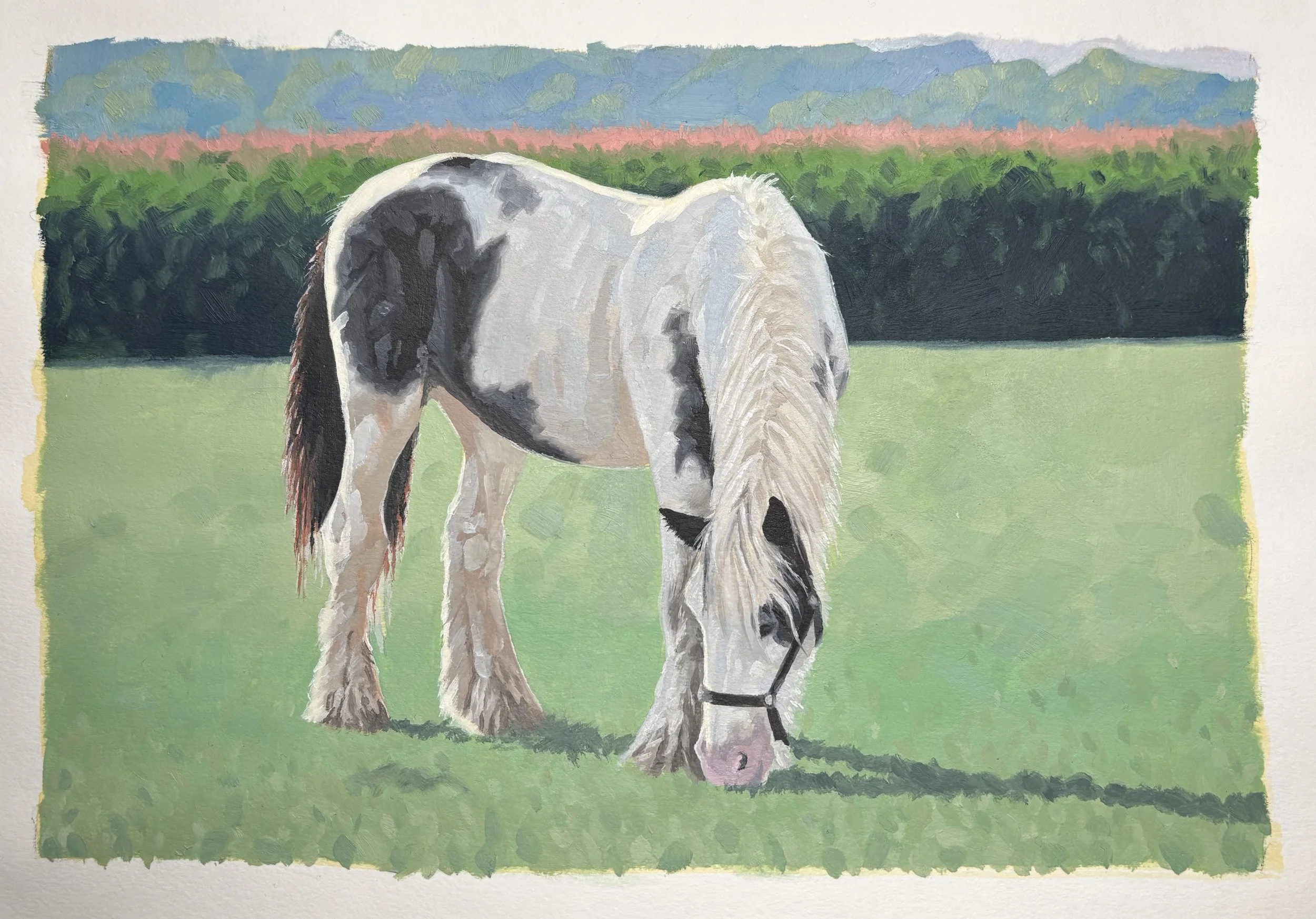
Rebel by Ella Baldwin
by Evelyn Lee Lucado
I Promise
One day I’ll wake up free from the ghosts
Of stony fingers wrapped around my soft throat—
And on that day, we’ll go out, just the two of us.
I’ll take you to that club in Manchester, the one
I found from a friend of a friend. For the first time
I’ll drink myself stupid under your sober eye,
We’ll dance in the sweaty, strobing light,
Arms carelessly brushing brambles of limbs.
When I drunkenly brave the bathroom graffiti gallery,
I’ll ask you to hold my drink—take my time
Smudging pink wax across my lips. I’ll ask you to
Hold my heels when I stumble sock-footed to the Uber.
And when I wake up hungover the next day
I won’t be afraid to find myself on your couch.
I promise one day I won’t bruise so easily.
Until then, I’m sorry that I withered when you took
The empty spot next to me on the couch. Sometimes
Your shadow looks like someone else.
One day I’ll let you see me.
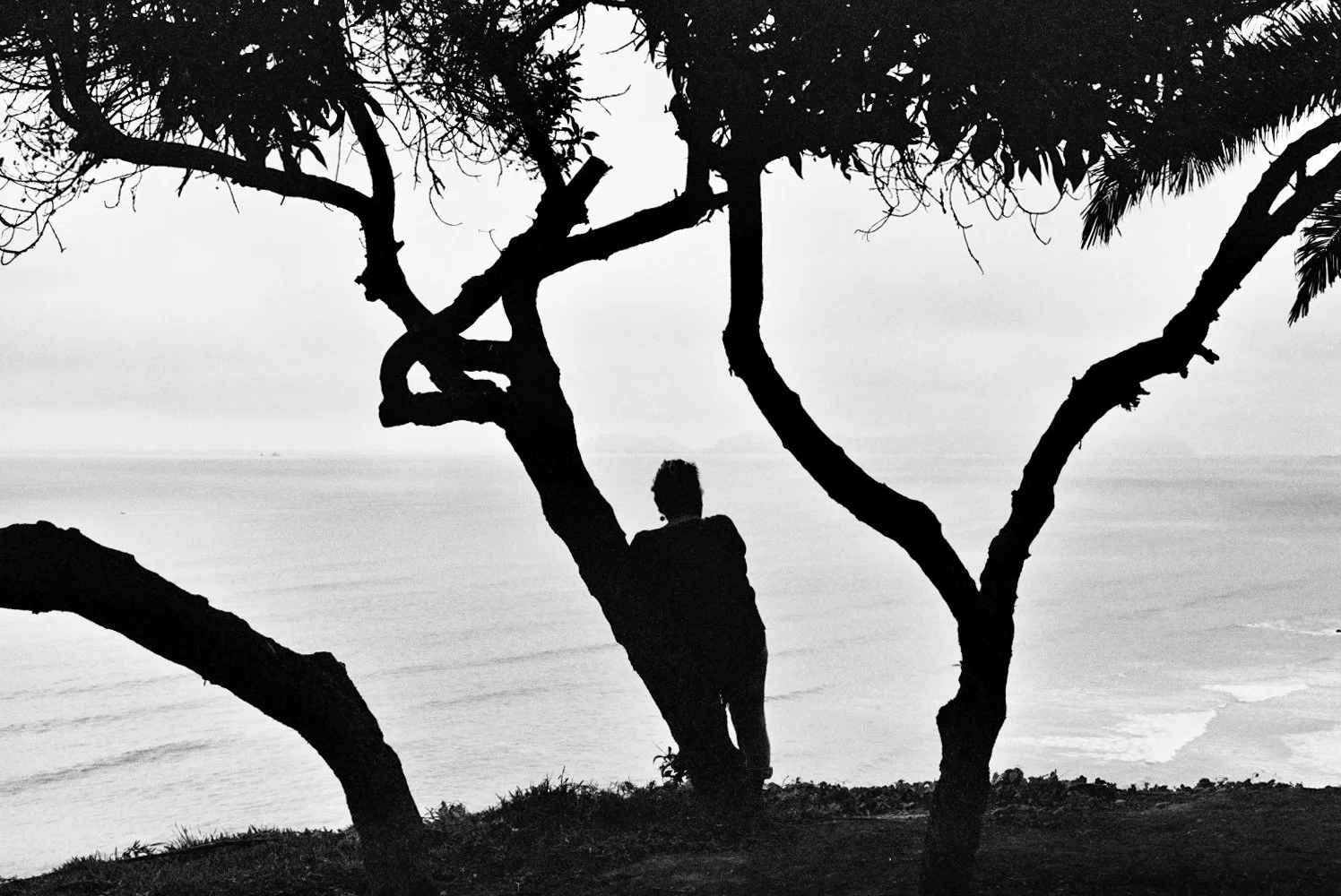
Te Extraño by Thomas Dario Kesey
by Piper Langenfeld
Dancer’s Lament
The whole room’s going chatter chatter chatter and I’m on the ground stretching—nose to knee, hands to floor, ass to ground—to bend my toes into position, and I’m having my friend tie the big bow on the back of my costume while I buckle my character shoes.
This is the last time I’ll ever dance, and I tell myself to take it all in, and to not think about this part of me that I’m ripping out like a seed out of soil that never really managed to bloom. A seed I watered and watered and watered. This is the last time so take a deep breath.
The studio owner is saying quiet, quiet! The audience can hear you! This is Nutcracker! And the little girls dressed as gingerbread are giggling and holding each other’s hands and the two little boys in the company are popping up and down like Whac-A-Moles, all the children gathered around her like Mother Ginger.
It’s six in the evening and it’s already dark outside and this is no home of mine. I’m on stage smiling and miming, and I’m pretending to be drunk as a party mom, and I clink my plastic glass with graduated girls I never learned the kindness of.
Then I’m off stage, and I’m running down the ramp in my little heels and my hoop skirt, trying not to trip, and I’m getting undressed as fast as I can into a white costume you can see my boobs through and I’m sewing myself into my pointe shoes, so god forbid the ribbons don’t show.
Then I’m back on stage for “Snow,” and I’m running behind the backdrop gasping, shooing the little girls on because I don’t think a single one of them knows how to count, and I think I’m actually seeing stars here, then applause. I have about ten minutes to change and embed a headpiece into my brain with bobby pins and I’m stabbing my ankle with my needle after changing my toe pads while my friend ties me into my Dew Drop costume as if I might run away into the road.
It’s intermission, and I’m eating a munchkin in the dressing room, and there’s a headache forming in the back of my skull like someone’s pushing a knife into my neck, and the studio owner’s going girls, girls! Line up, and be quiet, and don’t eat in your costume. Meanwhile my friend and I are shoving cold fries into our mouths.
We’re all doing a huddle in the middle of the stage, and I can feel the girls glower like their eyes will wilt me, and the curtain opens, and for the first 15 minutes of act two I’m grinning like there’s a gun to my head until “Flowers” starts and I’m really seeing stars within the first six steps.
My skirt’s balled in my fists backstage while the others dance in tandem as I wait for my turn, the baby pink fabric flowing down to my ankles to cover my huge calves, the corset cutting into my chest as I heave, gagging from not taking full breaths, and coughing, like I could die right then and there in the wings.
I’m shaking my hands back and forth and my heart’s pumping like crazy and sweat’s dripping down my face and into my eyes from the hot lights of the stage and I am praying, although I’ve never known God, not really and truly like I think others have.
The music is playing, and my mom’s in the audience, and so are my dad, my two grandmas, and my little brother clutching the program in his tiny fists are in the audience. I can imagine tears in my mother’s eyes, her baby dancing for the last time before she graduates; the last real time when she gets to be center stage and in those hot, hot lights with a big crown on her head that’s digging into her brain.
My glasses are fogging up as I wait. I’m going up on my toes, up on my toes to try and regain the feeling I’ve lost in my feet, bending this way and that to stretch and remain ready even though it feels like the sweat will never dry, like sweet, sticky nectar.
The little girls behind me are watching, and my hands are on my knees, and I’m thinking I can’t wait for this to be over so I can go the fuck home and never have to speak to these awful people again in my life and we can all go back to the saccharine smiles we never really mean.
The little girls are behind me and they’re watching. And I straighten up to set a good example because I’ve always loved this like no other and I hope they love it, too.
The girl I’m watching onstage is our Clara, a girl I’ve known my entire life, the first girl I met in kindergarten, the girl that lived on the next street over until last year when her mom got rich and they moved to a nicer neighborhood my family could never afford. The girl that bullied me in first grade when she got better friends. We had the same teachers and dances and steps and leotards and we look the same, except she’s beautiful and I have nicer hands. I’m watching the girl that said my eyes were too small and my skin too dark to ever be pretty. I’m watching for my cue, more than I’m really listening, because I know music and I can count it and I’ve practically drugged myself with it, but I prefer watching for it, so I can’t mess up, so no one can accuse me of going early. So I can only blame my own two eyes—if I fail, it will cannibalize my little girl dreams, but it will eat me and me alone.
I’m licking my teeth and scratching my leg and scratching my arm because that’s my nervous tick and all the sweat is making my eczema worse and I’m scared and exhausted and this is the second show today and my shoes are limp and wet and I’m sure there’s blood somewhere on my heel.
They wouldn’t tell us which show they were recording and I’m dreaming it’s this one because I tripped that morning on a slick spot of the stage.
There’s a stitch in my side, and I’m choking back my coughs so the audience won’t hear, and I can see our teachers watching that girl like she’s an angel plopped down in their laps. I’m tucking the ribbons of my shoes back where they’re supposed to be, back where I’ve sewn them to be, with dental floss, like I was taught when I was twelve.
Even as I crisp and wither at the edges, even as I draw my head down like a dying flower, I love this sport, and I plan to abandon it and watch it brown.
Soon this will be over—soon I can plant myself in a new place and a new city and a new studio but my part’s coming up—I’m actually breathing again, and I’m still slick with sweat but I’m relieved, and it’s almost over and if I do this part right then it’s all easy from here.
I’m shaking my hands again, one two three four five six seven eight, one two three four five six seven eight, and then my feet, one by one, and then one two three four and one two three four, and I’m still a bit nervous and I know I need to get this right.
And I see her gesture for me on stage, applause still dying from her turns, and I run out like a fly out of the rain and I’m smiling big until I think my ears will split, and all the faces in the audience are tiny and I feel humongous, like I could consume them whole.
I nail my turns and I eat the applause, clap by clap, like I’ve never eaten before, and I’m still smiling big and I can see my teachers in the wings clapping, too, and all of a sudden, I feel like the angel.
I’m dazzling and I’m shining from the jewels in my crown and when I turn, my skirt flares out like a flower and a moment on stage has never been so perfect.
Another thirty minutes go by, and I’ve wiped the sweat from my face and some of my makeup’s gone but I’ve made peace with it. With some more applause and a swoosh of a cape and a disappearing Nutcracker, I’m on stage bowing, and I don’t think I’ve ever been this happy to dance before in my life.
I sway in my shoes like I’m on some elixir, and I can’t see my mom, but I know her hands are smarting from clapping, and I can’t wait to go down into the audience and see all the little girls dressed up in their Sunday best as they ask to take pictures with the leads.
I’m swishing my skirt around in my hands, and I smell like feet and other girls’ lavender perfume, going from foot to foot because my legs have never hurt this bad before and I’m looking around for faces I know.
Older women are patting my shoulder and saying I was beautiful and wonderful and every word in the dictionary for good, and my grandmas are handing me bouquets and twenty-dollar bills, and my mom has her phone in her shaky hands for pictures, and my eyes are drooping from exhaustion and I’m just so glad it’s over.
My mom’s hugging me, and I’m trying not to get concealer on her nice blouse, and my dad’s saying great job honey, and I can’t wait to leave these godforsaken dancers behind so I can stop questioning my every move like a little squirming thing in the corner of a room trying to escape, and I’m wondering why I didn’t leave when the new owner changed the walls from purple to a sickly gray that makes us gaunt in the mirrors.
But I am not stuck in the ground, and I do not have roots, and I am standing there trying to convince myself that though this is home, home does not have to be home forever and soon I will be free from these curdled people and I will carve a new home for myself if it kills me.
by L.S. Luckey
Pip Arrives
After Charles Dickens
From fog to fog, red sunset, a sailing
gray haze, and one young life
blurring in black coal streaks, abstracted,
blotted out and drawn up thoughtlessly
by uncles, sisters, and strangers, turning home to a
marred, unfinished mess of brown on the roofs and clear gleam
on the hulks, silver against the sky of poverty’s shame.
afar-off from the dikes and the gates where the wrong
was done, this, your silhouetted life, bleeds out all over the streets
from the mouths of apprentices and
shopkeeps, caking sand-red
blacksmith mud on your heels and the rimy
windowpane, till you can’t see the meshes at night or the
forge—its home fire—the way Joe’s boy could.
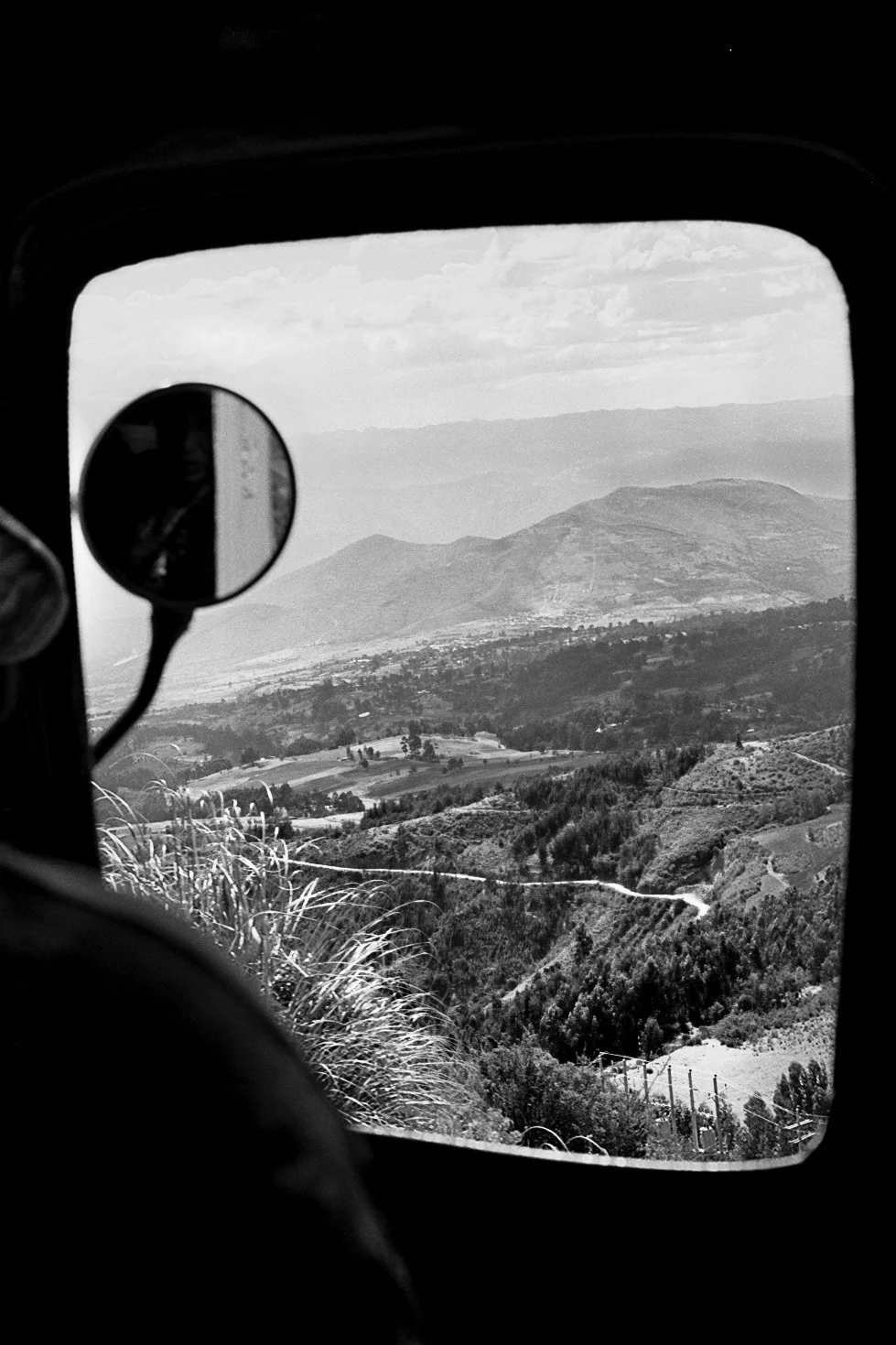
Pampa by Thomas Dario Kesey
by Evelyn Lee Lucado
There’s Still Time
I think if we’re lucky, we could live like the swans
In the lake behind my grandfather’s house, you know the place.
I’d dance too if you asked, though you never do. I think you don’t
Because you know the awkward stiffness in my arms,
Like the limb of a tree that sways with the wind but never bends.
I can’t say I’m as graceful as you,
The swan that circles the water, dipping your head beneath
The surface, then up, slowly, as if saying
—Look up, we still have time— so I do. I look up,
See that maybe my preconceived notions of holiness were just that,
Notions. You call me love, and I think that’s what I become,
Only in the sense that I am filled with something better than myself.
You let your head fall to my shoulder and your nose touches my neck
Followed by your mouth, which falls open like peonies
In the garden, petals falling to the side you fall apart with beauty
That was supposed to be impossible, you kiss my mouth I kiss
Yours and we fall apart together: like wings, like flowers, like notions.
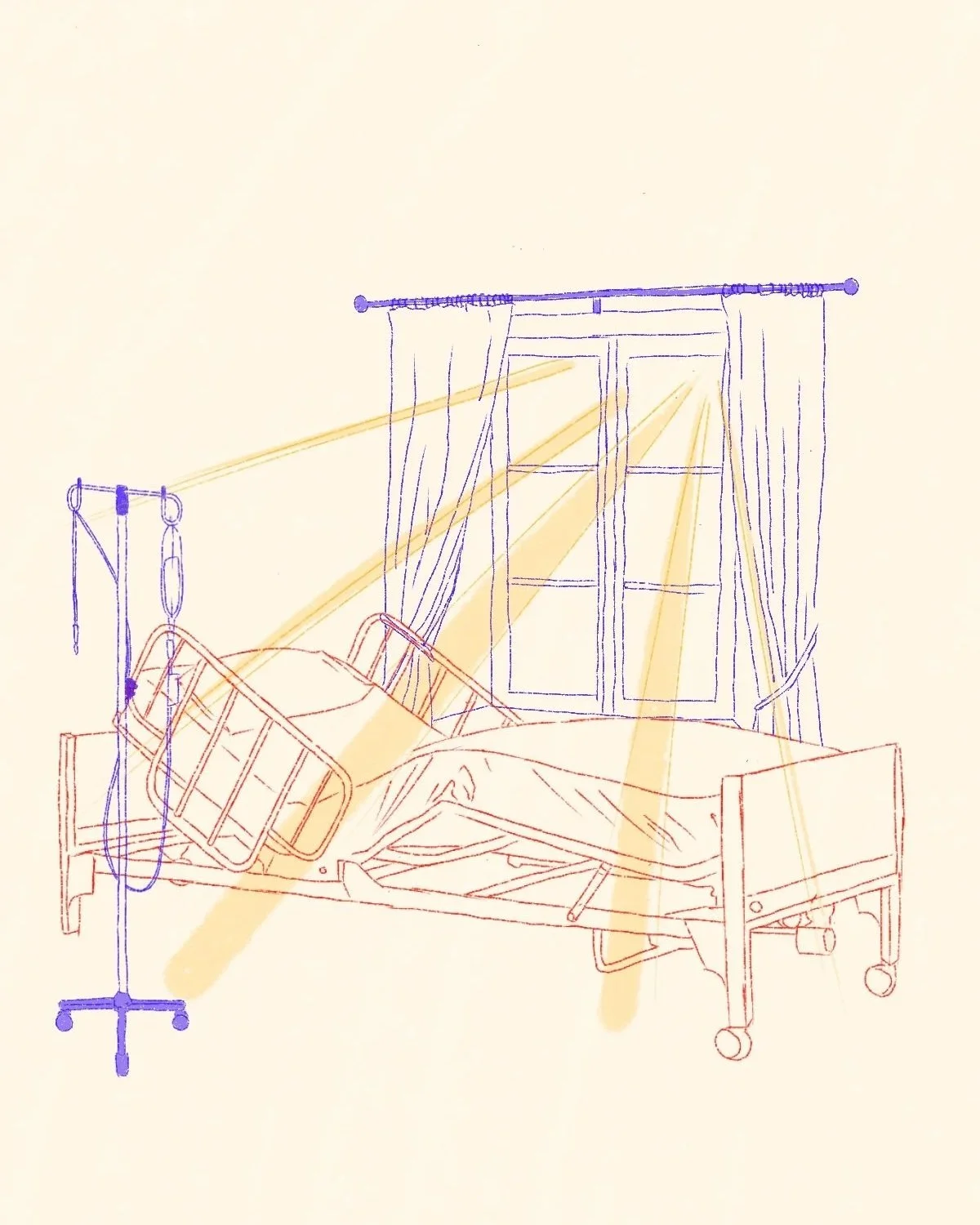
Six Years by Gretchen Cassell
by Jessica Kelso
A Short History of Tomatoes
fānqiéchăodàn (番茄炒蛋); Tomato and Egg
tomato · noun
to-ma-to (tə-mā-tō)
“The usually large, rounded, edible, pulpy berry of an herb (genus Solanum) of the nightshade family native to South America that is typically red but may be yellow, orange, green, or purplish in color and is eaten raw or cooked as a vegetable.”(1)
***
Tomatoes are berries.
Botanically, they are classified as fruits, and within the fruit family, they are classified as simple fleshy berries due to their thin exocarp, single flower formation, and internal seeds. Their scientific name is Solanum lycopersicum. They were once considered an aphrodisiac, but they were also once considered poisonous because of their relationship to the nightshade genus Solanaceae.
Dragon fruit is a berry. Bananas are berries. Strawberries are achenes.
***
The tomato vine was originally found in Mesoamerica by Spanish colonizers who were “intrigued by their unique appearance and brought tomato seeds back to Europe.” Thus, they were transplanted to Europe (2) and used as exotic decoration for upper-class gardens. From there, the tomato spread across Afro-Eurasia, soon becoming a staple ingredient in cultural cuisine.
Like the tomato, I was transplanted across oceans. I am “exotic” to the Western world. My features are not my own. I am Asian before I am a woman, before I am a person, before I am myself. I may have grown up in America, but my roots remain in China.
***
The summer my cousins lived with us, our garden performed at its worst. Or rather, it performed well enough, but we didn’t get to enjoy the fruit that it grew.
My mother takes great care in keeping the garden. She plants tomatoes in the garden, salvaging slivers of sunlight in our tree-covered backyard. She waters them and feeds them and takes great care to make sure that the tomatoes grown are cherished in the household. That year, something was eating our tomatoes.
We placed cages around the plants and chased off the groundhog that lived under our shed and made sure to keep a watchful eye on the garden.
I am in the backyard playing. My mother is doing yard work by the garden. The sun is warm, the trees sway in the breeze, the sky is blue, and puffy white clouds decorate the open space above us. My four-year-old cousin walks over to the garden. Her little hands reach right through the wire guards meant to keep animals out. She picks a red-ripe tomato and puts it in her mouth.
My mother watches.
***
My former Chinese teacher turned family friend planted a garden of tomatoes this past year. She only succeeded in feeding the rabbits and squirrels that live in her neighborhood. Her daughters call me jiějiě (姐姐) (older sister), but I am not really a part of their family.
***
I am in Taiwan and the locals can tell that I do not belong. Aside from speaking Northern mainland Chinese dialect, I have an American accent. The Beijing “r” sets me apart from the soft tones of Southern China and Taiwanese dialect. Their slang differs from my own. My words are clumsy and heavy-tongued; it is obvious I did not grow up here.
I eat stinky tofu at the street market for the first time and I am told that I am not a real Chinese. This isn’t the first time I’ve been told this. While I will never be truly “American,” I will also never be truly “Chinese.”
There are words for people like me. Words for “born in China but raised abroad” and “born and raised in China but now living in another country” and “born overseas but raised in China,” all exist to define if you are a “real Chinese” or not. There are words that define foreigners—White foreigners, American foreigners, Caucasians that permanently reside in China—everyone has a name. China is nothing if not ruthless in its national pride.
My word for “tomato” is xīhóngshì (西红柿). Theirs is fānqié (番茄). We argue over who is correct.
***
Growing up, my mom would pack cherry tomatoes in my lunch. I wouldn’t eat them. They were either too sour, too squishy, or too oddly shaped for my liking. I came home each day with the same tomatoes sitting in my lunch box, waiting for my mother to make me eat them before my afternoon snack.
Funnily enough, I had no problem eating large, sliced tomatoes. I liked globe tomatoes even though I didn’t like their squishy seeds. I ate around them and left the pulpy insides to be scraped into the trash.
Cut up fruit on a plate means “I love you” in most East Asian households. I grew up with both sliced tomatoes and spoken “I love yous”.
***
Tomatoes I have eaten: In my omelet. With my pasta. On my burger. As a snack. Chopped on bruschetta. In soups, salads, and stews. Beaten into the pulp of tomato soup, ketchup, and tomato sauce.
***
My family dog died when I was seven. Her name was Gretchen, and she was a German short-haired pointer. One year she chased a skunk in the field behind our house and got sprayed. My mother bathed her in tomato juice for a week to wash the smell out.
***
Tomatoes cure cancer.
Their combination of nutritional and non-nutritional antioxidants combat the oxygen-based reactions of various diseases and illnesses. As a result, tomatoes can help “prevent and cure malignant diseases like prostate cancer, breast cancer, lung cancer and other diseases like cataracts, heart diseases, diabetics, hyperglycemia, inflammation, arthritis, immune system decline, brain dysfunction [such as Alzheimer’s and Parkinson’s] and [contributes to] maintenances of body homeostasis.” (3)
Cancer runs in my family. My grandfather succumbed to esophageal cancer in 2018. My maternal grandmother beat colon cancer the following year. My paternal grandmother most certainly had some form of skin cancer when dementia ate away her memories of me. My aunt passed on Christmas day after a short stint with lung cancer.
Of course, I will contract cancer if I live long enough. It’s inevitable. The gift of a lengthy life comes at the price of generative health; it’s why preventative drugs exist.
My medical records are sealed. Or rather, they don’t exist.
One perk of international adoption from a communist country is that it leaves you an entirely blank slate. No family, no medical records, no knowledge of where you came from or who you’re going to be.
***
The tomato has been absorbed into the vegetable family thanks to John Nix in 1893, who protested paying the vegetable tariff on tomatoes because they were scientifically considered fruits. The Supreme Court of the United States ruled that tomatoes were socially considered vegetables. East Asia has assimilated into one culture for the profit of Western trends. K-pop, anime, matcha, tanghulu, TikTok, skincare, each exist in the Western world as trends, commodified for cheap profit and marketed as one culture despite their historic Chinese roots. In America, “everything that’s said about China…is biased, is colored, is not objective. And it’s bipartisan, both Democrats, Republicans, liberals, conservatives, whatever, everyone hates China…Casual hate [is] baked into every discussion surrounding China that occurs within the US. It’s the way [people in Western society] see China, the way they see Chinese culture, the way they see my culture…Chinese culture and Chinese pop culture especially will never be as accepted here as Korean and Japanese culture and Filipino culture and all other Asian cultures will be.” (4)
***
1“Tomato.” Merriam-Webster.com Dictionary, Merriam-Webster, https://www.merriam-webster.com/dictionary/tomato.
2 Mirza, Shalra. “Origin of Tomatoes: The Ancient American Plant and Its Culinary Significance.” Food, World History (2024). https://historycooperative.org/origin-of-tomatoes/
3 Ibrahim, Muhammad Suhail, et al. “Antioxidant and nutraceutical potential of tomato for health and life quality: A review: Tomato as functional fruit.” Food Science & Applied Microbiology Reports 2.1 (2023): 8-25.
4 Wang, Nina. [@ninaawang4]. (2023, March 24). Dealing with Sinophobia (ie tiktok ban). TikTok. https://www.tiktok.com/t/ZThXDcvQ1/
by Evelyn Lee Lucado
Portrait of Father and
Daughter Side by Side
My father was a very blonde child. I learned this from the picture hanging in my grandma’s bedroom. It’s an 80’s style portrait, the kind with the dark background and floating heads. It’s mounted across from the bedroom door, over top of the Rubbermaid crates, a goofy smiling kid in a red sweater. My hair looked the same at his age. I think you could have put us side by side and been unable to tell the backs of our heads apart.
He frowned when I dyed my hair brown last winter.
When I was little and still fit in his recliner with him, I would wake him up on Saturday mornings to watch Animal Planet in our pajamas. He used to smell like aftershave and laundry soap.
He named his first dog after Luke Skywalker. It was 1983, just after the release of Return of the Jedi. Dad bought Luke from his ex-girlfriend’s soccer coach, and by some miracle, convinced his own father to let the dog live inside. Luke was a chow-lab mix, a mean old thing with fluffy brown fur and dark eyes and teeth that tore through my father’s forearm, several times over.
We used to watch the new episode of Star Wars Rebels every Friday morning before I left for school, recorded from the night before. He would sit in his recliner and sip his coffee while I ate my Eggo waffles on the corner of the couch closest to him, pretending not to remember what it sounds like when we fight, raised voices echoing off the walls.
I wanted to dye my hair blue my first year in middle school. I wanted to download Instagram and wear eyeliner and lip gloss like the older girls at church did behind their father’s backs. I never could work up the nerve to do the same.
In middle school I spent a week agonizing over how to tell my mother that something was wrong with me. One night, trembling on the drive home from Youth Group, I chewed out the words “I think I have anxiety.” I frowned when my mother laughed, and said, “Of course you do, you are your father’s child;”
He and I used to argue about many things that I can’t quite remember, not for lack of trying. I think we argued about God a lot.
One night we sat together on the couch late into the evening. I think he was watching a football game, I can’t remember which team. I don’t remember what possessed me to ask this, but out of the blue I said, “Would you still walk me down the aisle if I married a woman?” He sighed that same heavy sigh he always does and I think my heart dropped when he said, “sweetheart, I honestly don’t know.”
The world shut down in 2020, we watched Contagion together, the pandemic movie with Matt Damon and Kate Winslet. Those long nights in lockdown the two of us sat up late into the night watching apocalypse movies—zombies, outbreaks, aliens, cataclysmic doomsday scenarios. We watched until something sparked a disagreement. Is there a moral way to survive the zombie apocalypse? Is there merit to the anti-mask movement? Mom called us crazy, I called us crazy too.
When I started college, my grandfather started dying. Maybe he was dying long before then. My father spent two years in constant exodus, back and forth from the home of his parents to the home of his children. One time I went with him to take care of my grandparents, my grandfather and his fading body, my grandmother and her fading brain. That week I saw my father cry for the first time, tucked away in the corner of a dark kitchen, red face in his hand, hand over his own greying beard.
We were in the car together, heading home from the hospital, an hour away from Appomattox when we got the call to turn around. My father’s father, an oak tree of a man, was laid out in a hospital bed, forty-five-degree incline to ease his COVID-stricken lungs, septic spleen, cyanotic hands, gasping breaths like prayers. It all came back to me in fragments—the early morning Star Wars, the late night talks, the fights—taking up space in my head next to that invasive image I still can’t stop myself from taking my father’s spot by the bed, thumb rubbing the paper skin of his hand, watching his brittle body prepare itself to die;
We don’t argue about God like we used too.
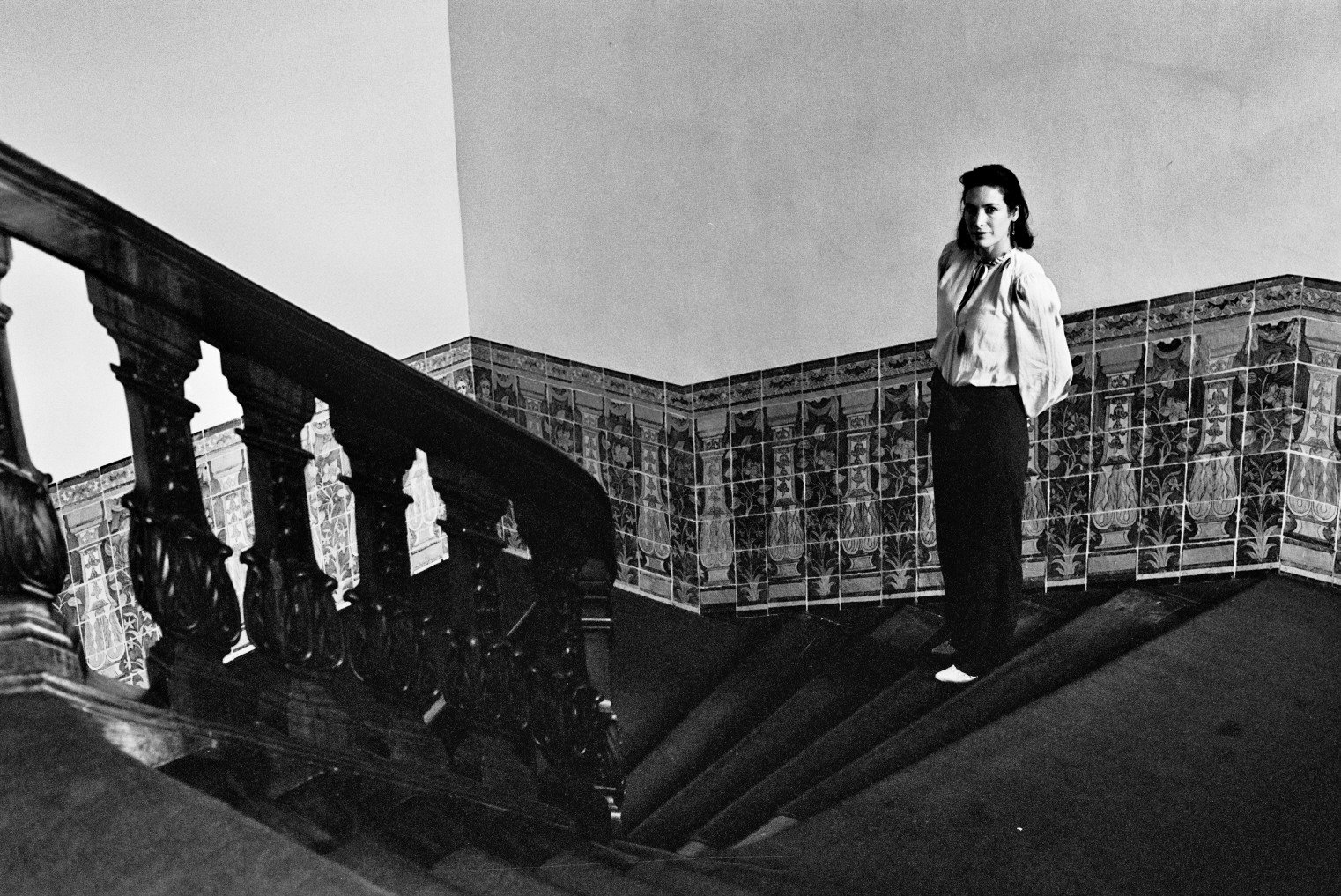
Te Extraño by Thomas Dario Kesey